
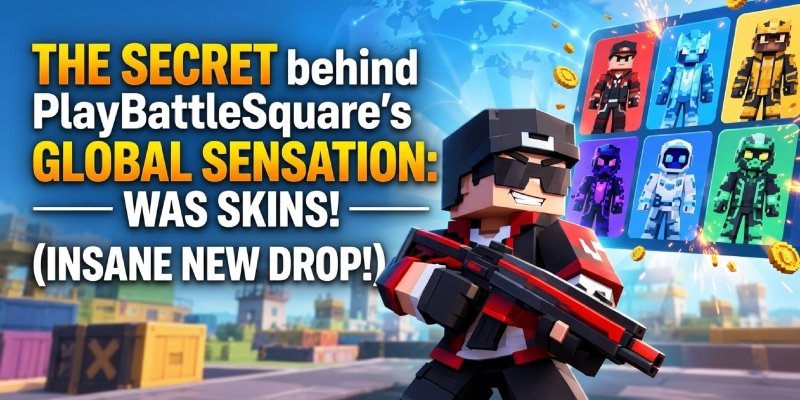

Can cosmetic items turn a game into a global sensation? Gaming skins have become an important part of modern gaming culture because they allow players to personalize characters, express their preferences, and make their in-game experience feel more individual. In some games, these digital items also encourage collecting, trading, and community discussions.
This raises an interesting question: Did skins help PlayBattleSquare become a global sensation?
The answer requires a distinction between general gaming trends and verified information about a specific platform. Skins can contribute to player engagement, but their influence depends on the game’s design, community, accessibility, and overall experience. At present, independently verified information is insufficient to establish that skins made PlayBattleSquare globally popular.
Understanding this distinction helps explain why cosmetic customization can matter in gaming without assuming that it is the main reason behind a particular game’s success.
What Is PlayBattleSquare?
PlayBattleSquare is the subject of online discussion around gaming and the possible role of skins in its popularity. However, the platform’s exact identity, development history, audience size, and specific cosmetic features could not be independently confirmed from reliable sources during this review.
That limitation matters because a platform’s name appearing in online articles does not automatically establish its popularity or the reasons behind its growth.
To evaluate PlayBattleSquare properly, readers would need reliable information about its gameplay, official features, development team, release history, and active community. Evidence such as official announcements, documented player statistics, or credible independent reporting could help establish these details.
Until that evidence is available, it would be inaccurate to describe PlayBattleSquare as a confirmed global success or to claim that skins directly caused its growth.
What Are Gaming Skins?
Gaming skins are cosmetic items that change the appearance of a character, weapon, vehicle, tool, or other in-game object. Depending on the game, a skin might introduce a different color scheme, outfit, visual effect, or decorative design.
In most games that use cosmetic customization, skins are intended primarily to change appearance rather than improve performance. However, the exact effect depends on the game’s rules. Some games separate cosmetics from gameplay advantages, while others may combine visual customization with additional features.
Skins can be obtained in different ways, including gameplay rewards, seasonal events, achievements, in-game purchases, or promotional campaigns. Not every game offers all these options, and availability can change over time.
The key point is simple: a skin gives players another way to personalize their experience. Whether that feature becomes a major attraction depends on how useful, appealing, and accessible players find it.
Why Do Players Like Gaming Skins?
1. Personalization and self-expression
Players often want their characters or equipment to reflect their preferences. A distinctive outfit or visual design can help someone create a recognizable identity within a game.
This customization may make the experience feel more personal. Instead of using the same appearance as everyone else, players can choose designs that match their taste or the style they want to present.
For some people, this is a minor feature. For others, collecting and selecting cosmetic items becomes an enjoyable part of playing.
2. Collecting and unlocking rewards
Some games make skins available through challenges, achievements, seasonal events, or other reward systems. Players may enjoy working toward an item because it gives them a clear objective beyond completing ordinary matches or missions.
Limited-time cosmetics can also attract attention when players want to collect a particular design. However, the effect depends on how the game handles availability and rewards.
A well-designed reward system can encourage continued participation. It does not necessarily mean that every player is interested in cosmetics or that skins alone keep a game active.
3. Recognition within a community
Distinctive cosmetic items can help players recognize one another. A rare or memorable design may become associated with a player’s identity, especially in games with active multiplayer communities.
Players may discuss their collections, share screenshots, or show their favorite designs in videos and online groups. These activities can extend a game’s presence beyond the time spent playing it.
Nevertheless, recognition is not the same as verified popularity. A skin may be popular within a small community without proving that the wider game has a global audience.
Can Skins Help a Game Become Popular?
Yes, skins can contribute to a game’s appeal, but they are only one possible factor.
Cosmetic items may give players more reasons to explore a game, participate in events, and share their experiences. When designs are memorable and the community enjoys discussing them, skins can also become part of a game’s public image.
Their influence is usually connected to the broader experience. Players must first have a reason to try the game and continue playing it. Interesting gameplay, reliable performance, accessible controls, and a welcoming community can all affect that decision.
A game with attractive skins may still struggle if it has technical problems, confusing mechanics, or an inactive player base. Conversely, a game with limited customization may succeed because its core gameplay is enjoyable.
For this reason, skins are best understood as a potential supporting factor rather than a guaranteed route to success.
Was It Skins That Made PlayBattleSquare Popular?
The question cannot be answered confidently without evidence specific to PlayBattleSquare.
There are three separate issues to consider.
First, were skins actually an important feature of the platform? Reliable product documentation or official gameplay material would be needed to confirm the available cosmetics and how players obtain them.
Second, did players show substantial interest in those skins? Credible community data, engagement figures, or independently documented player discussions could help establish whether cosmetic items attracted significant attention.
Third, did that interest cause the platform to grow? Even if players liked its skins, additional evidence would be needed to show that the cosmetics contributed meaningfully to new users, returning players, or wider recognition.
These questions are related, but they are not interchangeable. A game can offer skins without making them central to its identity. Players can enjoy cosmetics without recommending the game to others. A platform can also attract attention for reasons unrelated to customization.
Without trustworthy evidence addressing these points, the claim that skins made PlayBattleSquare a global sensation remains unverified.
The Role of Social Media and Gaming Communities
Social media can help gaming content reach people who have never played a particular game. Short clips, gameplay demonstrations, creator videos, and community discussions can introduce a game’s features to a wider audience.
Cosmetic items are well suited to visual content. A striking design can be shown quickly in a screenshot or short video, making it easy for viewers to understand what is different about it.
Players may also share their favorite appearances, compare designs, or discuss how to obtain specific items. When other people respond to that content, the conversation can continue outside the game itself.
However, social media visibility should not be confused with verified global popularity. A widely shared video does not establish the number of active players, the size of a game’s long-term audience, or the reason for its growth.
To determine whether social media helped PlayBattleSquare gain recognition, reliable engagement figures and platform-specific evidence would be necessary.
Do Skins Affect Gameplay?
In games where skins are purely cosmetic, their primary purpose is visual customization. They do not directly improve a player’s skill or guarantee better results.
A player’s performance generally depends on factors such as game knowledge, decision-making, practice, controls, and the rules of the particular game. Cosmetic appearance should not be treated as evidence of competitive ability.
There can also be exceptions. Some games include visual designs that affect how easily characters or objects can be seen. In competitive environments, developers need to consider whether cosmetic choices create unfair visibility advantages.
Because every game has its own rules, players should check how a specific title handles cosmetics before assuming that all skins are purely visual.
Are Gaming Skins Worth Buying?
Whether a skin is worth purchasing depends on personal preference, price, and the value a player expects to receive.
Someone who enjoys customizing a character may find a particular design worthwhile. Another player may prefer to spend nothing on cosmetic items and focus entirely on gameplay.
Before buying a skin, consider the following:
- Price: Does the cost fit your entertainment budget?
- Personal interest: Do you genuinely like the design, or are you reacting to pressure from other players?
- Availability: Is the item permanent, time-limited, or linked to a particular event?
- Restrictions: Can the item be used across different modes, characters, or versions of the game?
- Spending habits: Are purchases optional, and can you enjoy the game without them?
Players should be especially careful with offers that promise rare items, guaranteed rewards, or special access in exchange for payment. Check whether an offer is legitimate before sharing personal or payment information.
Cosmetic purchases are optional entertainment expenses. They should not be viewed as necessary for enjoying a game unless a specific game mechanic clearly states otherwise.
What Matters Beyond Skins?
A game’s long-term appeal usually depends on more than its appearance options. Several other factors can influence whether players try it, recommend it, and continue returning.
Gameplay quality
The central experience needs to be enjoyable. Clear objectives, satisfying controls, balanced challenges, and meaningful choices can give players reasons to continue.
Technical performance
Frequent crashes, long loading times, or poor performance can discourage players. Reliable operation helps make a game easier to enjoy across supported devices.
Accessibility
Clear instructions, understandable menus, suitable control options, and reasonable device requirements can help more people participate.
Community experience
Respectful interactions, fair rules, and effective moderation can make multiplayer environments more welcoming. A negative community experience may discourage players even when the game offers attractive cosmetics.
Updates and support
When developers maintain a game, communicate important changes, and address technical problems, players have more reason to trust the experience. The value of updates depends on whether they improve the game and meet genuine player needs.
These factors provide a broader framework for understanding gaming success. Without platform-specific evidence, they should be treated as general considerations rather than confirmed explanations for PlayBattleSquare’s popularity.
Frequently Asked Questions
Did skins make PlayBattleSquare a global sensation?
That claim has not been independently verified. Skins can contribute to a game’s appeal, but reliable evidence is needed to establish their role in PlayBattleSquare’s growth.
What are skins in video games?
Skins are cosmetic items that change the appearance of in-game characters, equipment, or objects. Their exact function depends on the game’s design and rules.
Do skins improve gaming performance?
In games where skins are purely cosmetic, they do not directly improve a player’s abilities. Individual games may have different rules or visual effects, so players should check the relevant details.
Why do players collect rare skins?
Players may enjoy collecting items because of their design, rarity, personal meaning, or connection to a particular event. The reasons vary between individuals and communities.
Can cosmetic items help a game attract new players?
They may contribute to interest when players share designs or discuss them online. However, gameplay quality, accessibility, community activity, and other factors can also influence whether people try a game.
Is PlayBattleSquare’s global popularity confirmed?
The information reviewed for this article was not sufficient to confirm its global popularity, player numbers, or the reasons behind any growth. Reliable platform-specific evidence would be needed to establish those claims.
Conclusion
Gaming skins can add personality, encourage collecting, and create opportunities for players to share their experiences. When combined with enjoyable gameplay and an active community, cosmetic customization may contribute to a game’s wider appeal.
However, the question of whether skins made PlayBattleSquare a global sensation remains unresolved. There is not enough independently verified information to establish the platform’s global reach or prove that cosmetic items caused its popularity.
The most reliable conclusion is that skins can support a game’s appeal, but they should not be treated as the sole explanation for success without evidence. Understanding PlayBattleSquare’s actual history, features, audience, and community response would be necessary to reach a more definite answer.