

Finding clear information about a digital platform helps users understand its tools and make better decisions. Good product documentation explains how features work, how to use them, and where to find help when something goes wrong. This is especially important for online testing platforms, where users need clear instructions and reliable learning resources.
The term Test.com product documentation features relates to two connected topics: the principles of effective product documentation and the tools available through the Tests.com online examination platform. Understanding both can help readers explore how digital information is organized and how online testing tools support exam preparation.
What Is Tests.com?
Tests.com is an online platform that provides practice exams and study resources for people preparing for professional and other examinations. It covers different subjects, including healthcare, real estate, skilled trades, and various career-related fields.
The platform offers interactive practice tests and additional learning tools. These resources help users review questions, understand their mistakes, and monitor their preparation progress.
Tests.com also provides help resources that explain how users can access their purchased materials and use available study options.
It is important to distinguish Tests.com from other platforms with similar names. The features discussed in this guide refer to the official Tests.com exam preparation website.
What Is Product Documentation?
Product documentation is a collection of information that explains how a product or service works. It helps users understand available features, follow instructions, and solve common problems.
For software and online platforms, documentation may include user guides, setup instructions, feature descriptions, tutorials, and frequently asked questions.
Good documentation should answer practical questions without making users search through unnecessary information.
For example, someone using an online testing platform may want to know how to start a practice exam, review incorrect answers, or access an eBook. Clear instructions make these tasks easier.
Main Features of Effective Product Documentation
1. Clear Feature Descriptions
Every product feature should have a clear explanation. Users should understand what a tool does and when they might need it.
Technical language should be limited when a simpler explanation can communicate the same information. However, important details and limitations should never be removed just to make the content shorter.
Clear descriptions help beginners understand a product and allow experienced users to find specific information quickly.
2. Organized Information
A well-organized documentation system groups related information under meaningful headings.
For example, account instructions should appear separately from troubleshooting guides. Similarly, product features, technical details, and payment information should have their own sections.
This structure makes information easier to find and improves the reading experience.
3. Search and Navigation
Search and navigation tools help users locate specific answers without reading every available page.
A useful documentation library should have descriptive headings, clear menus, and links between related topics.
These elements are particularly important when a platform offers several features or serves different types of users.
4. Step-by-Step Instructions
Some features require users to complete several actions. In these situations, numbered instructions are more useful than long paragraphs.
For example, a guide explaining how to access an online examination should clearly describe the required steps, from signing in to starting the test.
Screenshots and practical examples can also help users understand instructions more easily.
5. Regular Updates
Product interfaces and features can change over time. Documentation should reflect those changes so that users do not follow outdated instructions.
Regular reviews help maintain accuracy. When a feature changes, its related instructions, examples, and screenshots should also be checked.
Key Features Available on Tests.com
Tests.com offers several tools designed to support examination preparation. Each feature serves a different learning purpose.
1. Interactive Practice Tests
Interactive practice tests allow users to answer questions online rather than relying only on printed study material.
The platform covers different examination subjects, giving learners an opportunity to review topics related to their chosen field.
This format can make preparation more engaging because users actively answer questions and receive feedback.
2. Instant Scoring and Performance Reports
Tests.com offers automatic scoring for its online practice tests.
After answering questions, users can review their results and understand how they performed. The platform also provides reporting features with tables and graphs to help users track progress.
These results can help identify subjects that require additional attention.
For example, if a learner repeatedly struggles with questions about a particular topic, they can spend more time reviewing that subject before attempting another practice session.
3. Study Mode and Answer Explanations
Study Mode provides additional support during practice sessions.
The platform offers prompts for incorrect answers and explanations of correct answers. This allows learners to understand their mistakes instead of simply seeing whether an answer was right or wrong.
This approach is useful because understanding the reason behind an answer can improve learning.
It also makes practice sessions more informative, particularly for users who are studying unfamiliar subjects.
4. TestSIM for Exam Practice
TestSIM is designed to help users create practice sessions based on their preparation needs.
Users can adjust options such as the number of questions, time limits, and subjects covered. This provides flexibility when preparing for different examination formats.
For example, someone with limited study time may choose a shorter practice session. Another learner may prefer a longer session that more closely resembles an examination.
However, a simulated test should be treated as a preparation tool rather than a guarantee of the actual examination experience.
5. Focus Flash Cards
Focus Flash Cards provide another way to review study material.
Users can customize their study sessions according to available time and selected sections. This gives learners an alternative to answering full practice examinations.
Flashcards can be useful when reviewing important terms, facts, and concepts that need repeated attention.
6. TestNOTES
TestNOTES allows learners to record notes associated with questions.
This can be helpful when a user wants to remember an important explanation, make a personal observation, or return to a difficult question later.
Keeping notes connected to study material can make revision more organized.
7. Online and eBook Study Formats
Tests.com describes two formats for applicable practice exam products:
- Online interactive materials
- eBook materials in PDF format
The online version includes features such as scoring, review, and reporting. The eBook format provides another way to access study content.
Having different formats can make learning more convenient for people with different study preferences.
Availability depends on the particular product purchased, so users should check the relevant product details before ordering.
Benefits of Well-Designed Product Documentation
Good documentation offers several benefits to both users and organizations.
Better user experience: Clear instructions help people understand a product without unnecessary confusion. Users can complete common tasks more confidently.
Less time spent searching: Organized information makes it easier to locate answers. This can save time when users need help with a specific feature.
Fewer basic support questions: Helpful guides can answer common questions about accounts, features, and troubleshooting. This allows support teams to focus on more complicated issues.
Improved product understanding: Feature explanations help users understand what a platform offers and whether its tools match their needs.
More consistent information: Regularly reviewed documentation reduces the risk of outdated instructions and conflicting explanations.
How to Evaluate Documentation Quality
Not every documentation page provides the same level of usefulness. Before relying on a guide, readers should consider a few important points.
First, check whether the information explains the topic clearly. Instructions should be easy to follow, especially when they involve several steps.
Next, consider whether the content is current. Outdated screenshots or references to removed features can create confusion.
It is also useful to check whether the information comes from an official source. Product websites and their support centers are generally the best starting points for confirming platform-specific details.
Finally, look for practical explanations rather than general statements. Good documentation should help readers understand what to do, not simply describe why a feature might be useful.
Frequently Asked Questions
What is Test.com used for?
Tests.com provides online practice examinations and study resources for people preparing for different professional and career-related tests.
Does Tests.com offer interactive practice tests?
Yes. The platform offers online practice tests that allow users to answer questions and review their performance.
What is Study Mode on Tests.com?
Study Mode provides prompts for incorrect answers and explanations of correct answers to support the learning process.
What is TestSIM?
TestSIM is a practice tool that allows users to configure sessions using options such as question numbers, time limits, and selected subjects.
Does Tests.com provide study materials in PDF format?
The platform offers eBook materials in PDF format for applicable practice exam products. Users should check individual product details for availability.
Can users track their test performance?
Yes. Tests.com provides reporting features that allow learners to review results and monitor progress through tables and graphs.
Conclusion
Understanding product documentation and platform features helps users make better decisions when choosing digital learning resources. Effective documentation should be clear, organized, accurate, and easy to navigate.
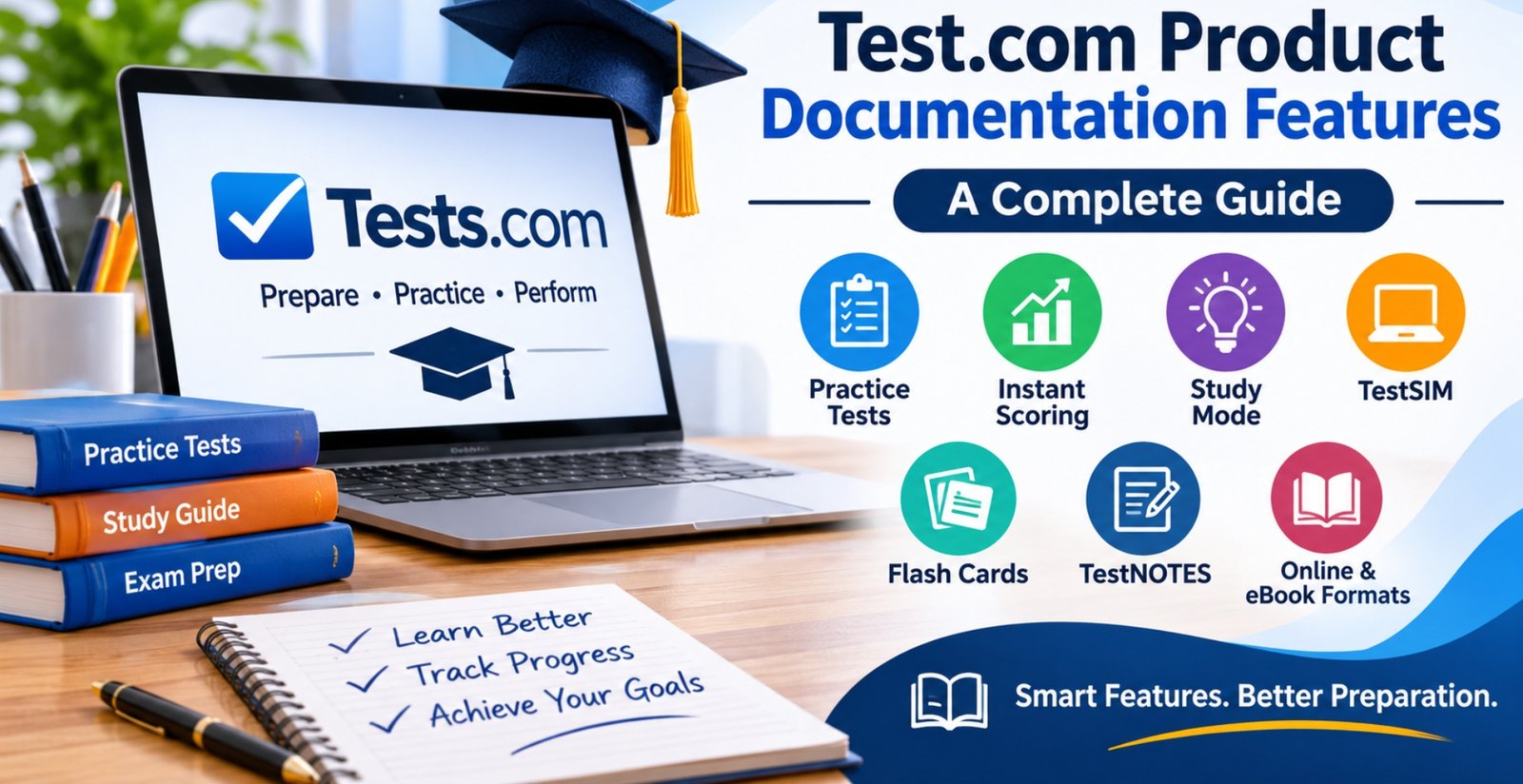
Tests.com provides several examination preparation tools, including interactive practice tests, automatic scoring, Study Mode, TestSIM, Focus Flash Cards, and TestNOTES. These features give learners different ways to practise, review information, and monitor their progress.
For the most accurate instructions and product details, users should consult the official Tests.com website and its help resources before purchasing or using a particular study product.