
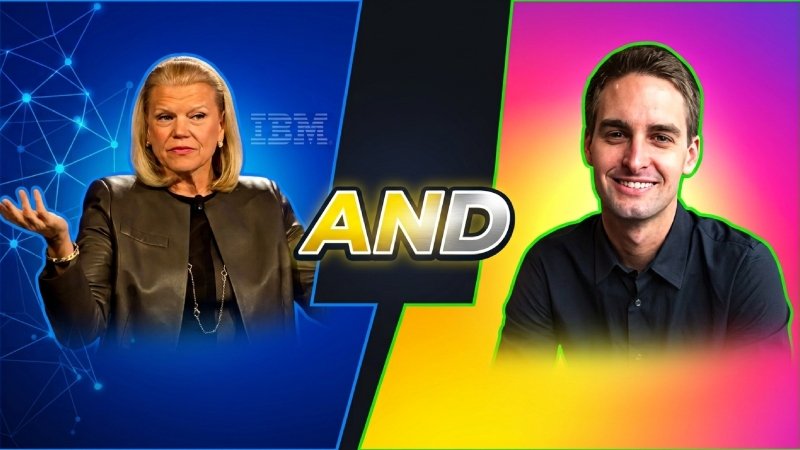

Ginni Rometty and Evan Spiegel have built their careers in different parts of the technology industry. Rometty is best known for leading IBM, one of the world’s established technology companies, while Spiegel is known for co-founding Snapchat and leading Snap Inc. Their professional backgrounds differ, but both have experience making decisions that affect how businesses use and develop technology.
There is also a documented professional connection between them. Both are listed as members of the Aspen Institute Economic Strategy Group, an organization that brings together business leaders, economists, and policymakers to discuss major economic challenges. Spiegel’s membership was announced in February 2026, while Rometty is recognized for her experience as IBM’s former chairman, president, and CEO and her work in workforce development.
Their shared membership provides a factual reason to discuss them together. However, it does not establish that they are relatives, close friends, or business partners. Their individual careers offer a clearer way to understand their contributions to technology and leadership.
What Connects Ginni Rometty and Evan Spiegel?
The strongest documented connection between the two executives is their membership in the Aspen Institute Economic Strategy Group. The organization focuses on evidence-based approaches to important economic issues in the United States.
Its members come from different professional backgrounds, including business, economics, and public policy. Their participation creates an opportunity to contribute to discussions about the economy, employment, productivity, and other long-term challenges.
Spiegel joined the group in February 2026 while serving as co-founder and CEO of Snap Inc. Rometty’s membership reflects her experience leading IBM and her continued involvement in workforce development and business leadership.
Their shared membership should not be confused with a joint commercial venture. There is no established evidence that they have founded a company together or entered into a private business partnership.
The connection is still meaningful because it brings two different technology careers into the same economic-policy discussion. Rometty’s experience comes from managing a large, established corporation, while Spiegel’s experience centers on building and leading a consumer technology business.
Who Is Ginni Rometty?
Ginni Rometty, whose full name is Virginia M. Rometty, is an American business executive who served as chairman, president, and CEO of IBM. She became the company’s chief executive in 2012 and retired at the end of 2020.
Her career at IBM began in 1981. She studied computer science and electrical engineering at Northwestern University before joining the company. Over the following decades, she worked in a range of technical, consulting, sales, marketing, and management roles.
This experience gave her a broad understanding of IBM’s operations before she took its top leadership position. Rather than founding a new company, she advanced within an established organization and eventually became responsible for its overall direction.
Her Leadership at IBM
During Rometty’s tenure as CEO, IBM worked to strengthen its position in areas such as hybrid cloud computing, artificial intelligence, security, and data services.
The company also made substantial changes to its business portfolio. IBM reported acquiring 65 companies during her CEO tenure and reinventing more than half of its portfolio. These changes formed part of a broader effort to focus on higher-value technology services and evolving customer needs.
One of the most significant transactions was IBM’s acquisition of Red Hat, which closed in 2019. The acquisition brought together IBM’s enterprise technology services and Red Hat’s open-source software capabilities. It also became a major part of IBM’s hybrid-cloud strategy.
These developments illustrate the responsibilities Rometty faced as the head of a large technology company. She had to consider existing customers, employees, business operations, and the need to invest in emerging technologies.
Her career also demonstrates that corporate transformation often involves more than launching new products. It can require changes to business priorities, acquisitions, investment decisions, and the way an established organization serves its customers.
Her Work After IBM
Rometty’s professional activities continued after she left the CEO role. Her interests include workforce development, corporate governance, and helping employers recognize skills when evaluating job candidates.
She has been associated with OneTen, an initiative focused on skills-based hiring and employment opportunities. The organization later adopted the name SkillsRight, where Rometty has served as a co-chair.
This work connects business leadership with employment policy. As technology changes the nature of many jobs, employers must consider how workers can acquire relevant skills and demonstrate their abilities.
Rometty has also served on corporate and institutional boards. Her work after IBM shows that senior executives can continue contributing through governance, workforce initiatives, and public discussions without running a company day to day.
Who Is Evan Spiegel?
Evan Spiegel is an American entrepreneur and the co-founder and CEO of Snap Inc., the company behind Snapchat.
He attended Stanford University, where he worked with Bobby Murphy on the idea that became Snapchat. The application introduced a different approach to digital communication by allowing users to send photos and videos designed to disappear after being viewed.
Snapchat grew from a student project into a widely used communication platform. Its features later expanded to include Stories, camera filters, augmented reality effects, and other ways to share visual content.
Snap Inc. subsequently became a publicly traded company. Spiegel continued leading the business as it expanded its products and developed new ways to reach users and advertisers.
His career differs from Rometty’s because he helped create the product and company he now leads. As a founder, he has been involved in both the company’s early development and its longer-term business strategy.
Leading Snap Inc.
Snap operates in a competitive digital market where user preferences, advertising demand, and technology change quickly. Its business depends on keeping its services useful to consumers while developing sustainable sources of revenue.
Snapchat’s camera-based features remain central to the company’s identity. The platform has also expanded into augmented reality, which allows digital effects and information to interact with a user’s surroundings.
Advertising is another important part of Snap’s business. The company works with advertisers who want to reach audiences through visual and mobile formats. Balancing user experience with commercial goals is an ongoing challenge for social media platforms.
Spiegel’s role involves making decisions about product development, business priorities, technology investment, and the company’s long-term direction.
Snap’s Financial Position in 2026
Snap’s second-quarter 2026 financial report provides a useful example of the opportunities and challenges facing the company.
The company reported revenue of $1.599 billion for the quarter ended June 30, 2026, representing a 19% increase compared with the same period a year earlier. It also reported a net loss of $164 million and free cash flow of $121 million.
Snap reported 971 million monthly active users during the quarter. These figures show that the company has a large audience and growing revenue, while its reported net loss demonstrates that revenue growth and profitability are different measures.
These figures represent company-reported results for a specific quarter, not a guarantee of future performance. They help explain the business environment in which Spiegel continues to lead Snap.
How Their Leadership Styles Differ
The main difference between these executives is the type of organization they have led and the paths they took to leadership.
Rometty developed her career within IBM over several decades. Her work as CEO involved guiding an established company through changes in technology markets and business priorities. She had to balance new investments with existing operations and customer relationships.
Spiegel helped create Snapchat and continued leading the business as it expanded into a public company. His responsibilities involve maintaining the appeal of a consumer product while responding to competition and developing new services.
These paths present different challenges. Leaders at established corporations may need to modernize existing systems while managing complex operations. Founders may have more direct involvement in a product’s original vision but must also build the systems, teams, and business models needed for long-term growth.
Neither route guarantees success. Both require decisions about technology, people, investment, and changing customer expectations.
Technology and Innovation in Their Careers
Technology has played a central role in both careers, but their areas of focus have differed.
At IBM, Rometty’s leadership included efforts to strengthen enterprise services, hybrid cloud, security, and artificial intelligence. These technologies serve businesses that need to manage information, protect systems, and operate complex digital infrastructure.
Spiegel’s work has focused more directly on consumer communication and visual technology. Snapchat’s camera tools and augmented reality features allow users to communicate and interact with digital content in new ways.
Snap has also moved into wearable computing through its Specs initiative. In September 2026, the company announced Specs-related experiences, partnerships, and AI developments. This marked a public milestone in its effort to explore augmented reality glasses and computing beyond conventional smartphone screens.
The two careers demonstrate that innovation can take different forms. One involves transforming technology services for large organizations; the other involves creating digital experiences for consumers.
Are Ginni Rometty and Evan Spiegel Related?
No publicly documented family relationship between Rometty and Spiegel has been established.
Their professional biographies focus on separate careers and different organizations. Rometty is associated with IBM and workforce development, while Spiegel is associated with Snap Inc. and Snapchat.
It is important to distinguish a professional association from a personal relationship. Their membership in the same economic strategy group is documented, but that fact does not establish that they are family members or have a close personal connection.
Have They Worked Together?
Their shared membership in the Aspen Institute Economic Strategy Group is a documented professional association. However, that membership does not establish that they have collaborated on a specific company, product, or commercial project.
Business leaders can participate in the same professional organization without directly working together. A claim about a joint venture or formal collaboration would require additional evidence, such as an official announcement or reliable reporting.
For this reason, their careers are best compared through their leadership experience and professional interests rather than through an assumed partnership.
What Can Their Careers Teach Us About Leadership?
Their experiences offer useful lessons for people interested in business and technology.
Rometty’s career illustrates the value of gaining experience across different functions within an organization. Her progression at IBM involved technical work, consulting, business leadership, and strategic responsibility. That broad experience helped prepare her for the demands of leading a multinational company.
Spiegel’s career illustrates the challenges of building a business around a new product. Snapchat had to attract users, develop features, and establish a business model that could support the company’s growth.
Both careers also show why leaders need to adapt. Technology markets change, customers expect new services, and businesses must decide how to invest in future opportunities without losing sight of current needs.
Their different backgrounds provide examples of how leadership can develop through corporate experience or entrepreneurship. The most relevant approach depends on the organization, its goals, and the challenges it faces.
Frequently Asked Questions
Why are Ginni Rometty and Evan Spiegel mentioned together?
Both are members of the Aspen Institute Economic Strategy Group. Their careers also provide a useful comparison between corporate leadership at IBM and entrepreneurship at Snap Inc.
What is Ginni Rometty known for?
Rometty is best known for serving as IBM’s chairman, president, and CEO from 2012 through 2020. Her tenure included changes to IBM’s business portfolio and investment in areas such as hybrid cloud and artificial intelligence.
What is Evan Spiegel known for?
Spiegel is best known as the co-founder and CEO of Snap Inc., the company behind Snapchat. He helped develop the platform and has continued leading the business as it expanded its products.
Are they business partners?
Their shared Aspen Institute membership is documented, but it does not establish a joint business venture or private commercial partnership.
What is the main difference between their careers?
Rometty advanced through an established technology company and led its transformation. Spiegel co-founded a consumer technology business and has continued leading the company he helped build.
Conclusion
Ginni Rometty and Evan Spiegel have followed different paths to leadership, but both have played significant roles in the technology industry. Rometty’s career at IBM involved guiding an established company through changes in technology and business strategy. Spiegel’s career has centered on building Snapchat and leading Snap Inc. as it develops new products and business opportunities.
Their shared membership in the Aspen Institute Economic Strategy Group provides a documented professional connection. Beyond that association, their careers are best understood as separate examples of corporate leadership and entrepreneurship.
Comparing their experiences helps explain the different challenges technology leaders face, from transforming established businesses to developing consumer products. Their stories also demonstrate why reliable information matters: a meaningful comparison does not require an unsupported claim about a personal relationship or business partnership.